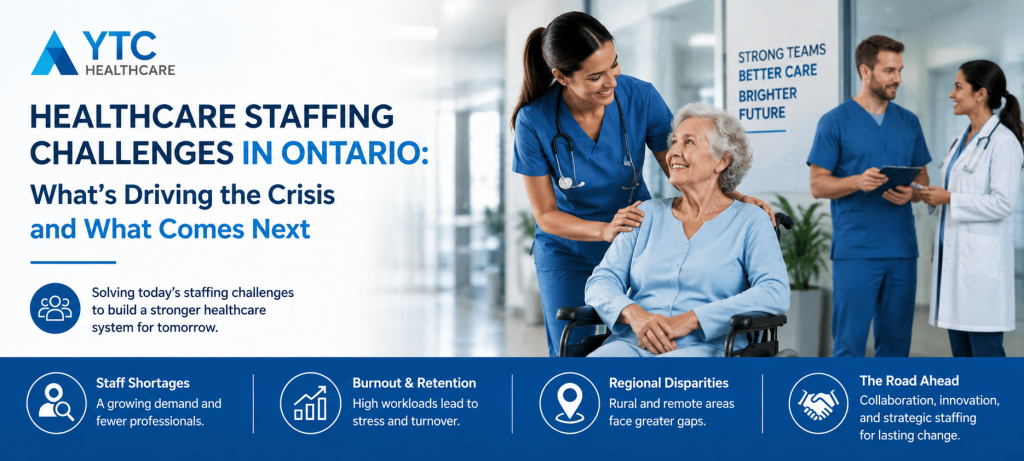
Ontario’s healthcare system is under real strain right now. Nurses are burning out, family doctors are retiring faster than they’re being replaced, and hospitals are leaning harder on costly private agencies just to keep units staffed. This isn’t a temporary rough patch. It’s a structural shortage that’s been building for years and is now showing up in emergency room closures and longer wait times across the province. Practices navigating staffing pressures like these often lean on expert medical billing services to keep revenue cycle operations steady even when clinical staffing is stretched thin.
This guide walks through what’s actually driving Ontario’s healthcare staffing crisis, who it’s hitting hardest, and what the data says about where things are headed.
What’s Causing Ontario’s Healthcare Staffing Crisis?
Ontario’s healthcare staffing crisis comes down to three overlapping pressures: the province has the lowest registered nurse-to-population ratio in Canada, hospital budgets are being cut faster than staffing needs are shrinking, and burnout is pushing existing staff out of the profession altogether. Each of these problems makes the others worse.
The Nursing Shortage, By the Numbers
Ontario doesn’t just have a nursing shortage. It has the worst nurse-to-population ratio of any province in the country, and the gap isn’t closing on its own.
- The Ontario Nurses’ Association projects Ontario will lose more than 7,000 nurses by 2028 due to continued underfunding.
- Nationally, the Institute for Canadian Citizenship estimates Canada needs roughly 28,000 more registered nurses, 14,000 more licensed practical nurses, and 2,700 more nurse practitioners to meet current demand.
- RNAO reporting points to compensation that hasn’t kept pace as a major driver behind why nurses are leaving Ontario for other provinces or leaving the profession entirely.
Why This Matters Beyond the Hospital Floor
When nurse-to-patient ratios stay this stretched, it doesn’t just affect wait times. It directly affects patient safety, since overworked staff have less time per patient and higher odds of error. It also creates a feedback loop: as conditions worsen, more experienced nurses leave, which pushes the remaining staff even further past capacity.
The Primary Care Gap Is Getting Worse
An estimated 3 million Ontarians currently don’t have a regular family doctor. That number is expected to climb as the province’s physician workforce ages toward retirement without enough new doctors entering family practice to replace them. Similar staffing and billing pressures show up across other specialty practices too, such as those covered in this OBGYN medical billing guide.
This gap pushes more patients toward walk-in clinics and emergency rooms for care that a family doctor would normally handle, adding pressure to parts of the system that are already stretched thin. As more patients turn to walk-in and urgent care settings as a result, billing complexity rises right along with patient volume, a dynamic covered in this urgent care billing guide.
Burnout and Workplace Safety Are Now Staffing Issues
Burnout isn’t just a wellness talking point in Ontario’s healthcare sector anymore. It’s directly tied to staffing capacity.
- RNAO reporting shows more than 70% of nurses report high levels of burnout.
- Frontline workers are facing rising rates of workplace violence, driven in part by long wait times and overcrowding that frustrate patients and families.
- CIHI research on health workforce conditions points to heavier workloads and longer hours, with limited access to flexible scheduling, as a consistent theme across hospitals.
When burnout and safety concerns push experienced staff to leave or reduce their hours, the shortage compounds instead of stabilizing.
Long-Term Care Faces Its Own Staffing Strain
Long-term care homes are dealing with a parallel shortage of personal support workers and nurses. This makes it difficult for many facilities to consistently meet daily direct-care hour targets for residents, a benchmark meant to ensure residents get a minimum amount of hands-on care each day. Comparable funding and billing pressures show up in long-term care settings south of the border too, particularly around Medicaid-funded care, as covered in this Medicaid billing 101 guide.
Unlike hospital staffing, long-term care shortages tend to get less public attention despite affecting some of the most vulnerable patients in the system.
Budget Cuts Are Colliding With Rising Demand
Hospitals across Ontario are operating under strict funding limits that have led to job cuts and eliminated positions in critical care units, even as patient demand keeps climbing. Similar strain shows up in imaging-heavy departments as well, where billing complexity is significant on its own, as detailed in this radiology medical billing guide. Reporting from CUPE on Scarborough hospital workers describes staff shortages creating unsafe working conditions for both patients and healthcare workers, with patients facing longer waits as a direct result.
This creates a difficult loop: cuts are often framed as a response to budget pressure, but they tend to increase reliance on expensive short-term solutions like private nursing agencies, which drains public healthcare dollars even further.
The Rise of Private Agency Staffing
As public facilities struggle to fill permanent positions, many are turning to private nursing agencies to cover shifts. While this fills immediate gaps, it comes at a significantly higher cost than hiring permanent staff, and that spending pulls resources away from the public system it’s meant to support. A similar build-versus-outsource tradeoff shows up in billing operations too, such as when a practice weighs hiring in-house against working with a radiology billing services partner.
| Staffing Approach | Short-Term Effect | Long-Term Effect |
|---|---|---|
| Permanent hiring | Slower to fill gaps | Builds stable, experienced teams |
| Private agency staffing | Fills shifts quickly | Higher cost, drains public budgets |
| Overtime for existing staff | No new hiring needed | Accelerates burnout |
Frequently Asked Questions
Why is Ontario facing a healthcare staffing shortage?
Ontario has the lowest registered nurse-to-population ratio in Canada, combined with hospital budget constraints and high nurse burnout rates. These factors together are pushing experienced staff out of the system faster than new staff can be trained and hired.
How many nurses does Ontario need to catch up to other provinces?
Ontario would need thousands more registered nurses just to reach the national average ratio, and the Ontario Nurses’ Association projects the province will actually lose more than 7,000 nurses by 2028 without changes to funding and compensation.
Are Ontario hospitals understaffed?
Yes. Reporting from healthcare worker unions and provincial nursing associations describes conditions including job cuts in critical care units, rising overtime, and emergency room closures tied directly to staffing shortages.
How many people in Ontario don’t have a family doctor?
An estimated 3 million Ontarians currently lack a regular family doctor, a number expected to grow as more physicians reach retirement age without enough new doctors replacing them.
What is driving nurse burnout in Ontario?
Heavier workloads, longer hours, limited access to flexible scheduling, and rising rates of workplace violence linked to overcrowding and long wait times are all cited as contributing factors in recent workforce research.
Why do hospitals rely on private nursing agencies if it costs more?
Private agencies can fill open shifts faster than the permanent hiring process, which matters when a unit is critically short-staffed. The tradeoff is that agency staffing costs significantly more than permanent hires, straining hospital budgets over time.
Is the long-term care sector facing the same staffing issues as hospitals?
Yes. Long-term care homes are dealing with shortages of personal support workers and nurses, which makes it difficult to consistently meet daily direct-care hour targets for residents.
The Bottom Line
Ontario’s healthcare staffing crisis is the product of years of overlapping pressure: the lowest nurse ratio in Canada, a shrinking supply of family doctors, rising burnout, and budget decisions that haven’t kept pace with patient demand. Addressing it will take more than short-term fixes like agency staffing. It requires sustained investment in permanent hiring, compensation, and working conditions across hospitals and long-term care alike.