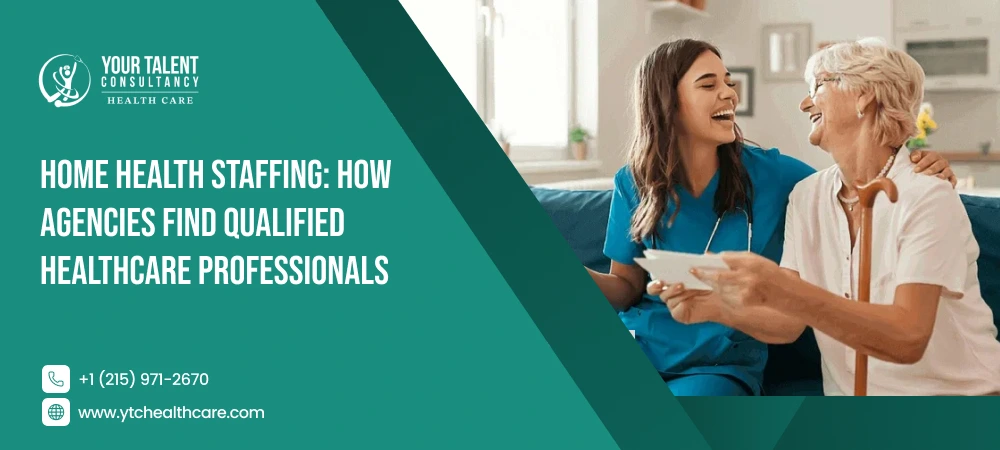
Home healthcare depends on more than having someone available to visit a patient. The professional entering a person’s home must have the right qualifications, understand the individual’s care requirements, and be capable of providing consistent support in an environment where immediate supervision may not always be available.
For home health agencies, finding that person can be challenging. A shortage of qualified nurses, scheduling conflicts, specialized patient needs, and lengthy credential verification processes can all delay placements. Hiring quickly without appropriate screening can create even greater problems, including inconsistent care, missed visits, and potential safety concerns.
This is where a structured home health staffing process becomes essential. Professional staffing agencies help home healthcare businesses identify suitable candidates, verify their qualifications, assess their practical abilities, and match them with assignments that reflect their experience.
Understanding how this process works helps families, healthcare organizations, and home health business owners make better staffing decisions.
What Is Home Health Staffing and Why Does It Require Specialized Recruitment?
Home health staffing involves recruiting, screening, and placing healthcare professionals who provide medical or personal support in patients’ homes. These professionals may assist older adults, individuals recovering from surgery, people with disabilities, and patients managing chronic health conditions.
Unlike hospital recruitment, home healthcare recruitment must account for the working environment outside a traditional clinical facility.
A professional may work independently during a home visit, travel between multiple clients, or provide ongoing support to an individual receiving care throughout the day. Their responsibilities depend on their professional designation, qualifications, the applicable care plan, and the setting in which they work.
For example, a patient recovering from surgery may require nursing support for clinical monitoring, while another individual may need assistance with bathing, dressing, mobility, and everyday activities.
These situations require different professionals.
Ontario’s home and community care system distinguishes between professional healthcare services, personal support services, and homemaking services. This distinction is useful when determining which type of worker a patient actually needs.
Home health agencies must therefore look beyond general healthcare experience and identify candidates whose qualifications and practical abilities match the specific assignment.
Which Healthcare Professionals Do Home Health Agencies Recruit?
A home healthcare business may require several professional roles depending on its services, patient population, and operating model.
Recruitment should begin with a clear understanding of what each professional is qualified to provide.
1. Registered Nurses (RNs)
Registered Nurses provide professional nursing care for patients who require clinical assessment, monitoring, and nursing interventions.
Depending on their competence and the applicable scope of practice, their responsibilities may include:
Assessing patient conditions and identifying changes that require attention.
Developing and implementing nursing care plans.
Providing wound care and supporting recovery following surgery.
Monitoring chronic health conditions.
Coordinating with physicians and other healthcare professionals.
Educating patients and family members about appropriate care routines.
Home health agencies recruiting RNs should evaluate their registration status, clinical experience, communication abilities, and familiarity with independent home-based care.
2. Registered Practical Nurses (RPNs)
In Ontario, Registered Practical Nurses provide nursing services within their authorized scope of practice and individual competence.
They may support patients who require ongoing nursing assistance, clinical monitoring, and help managing specific health conditions.
Relevant experience may include:
Geriatric nursing.
Rehabilitation support.
Chronic disease management.
Post-operative recovery.
Medication-related nursing responsibilities within their scope.
Long-term and community-based care.
Agencies should consider the complexity of the assignment before matching an RPN with a patient. The professional’s experience and scope of practice must be suitable for the care required.
3. Personal Support Workers (PSWs)
Personal Support Workers provide essential assistance with daily living activities. They help individuals maintain comfort, dignity, and independence while receiving care at home.
Their responsibilities may include:
Assistance with bathing and personal hygiene.
Dressing and grooming support.
Mobility and transfer assistance.
Help with eating and daily routines.
Companionship and emotional support.
Observing and reporting changes in a client’s condition.
For this role, recruitment should consider relevant education, practical training, previous care experience, communication skills, and the ability to follow individualized care plans.
4. Allied Healthcare Professionals
Some patients require additional support beyond nursing and personal care.
Depending on the services offered, home health agencies may recruit:
Physiotherapists for mobility, rehabilitation, and physical recovery.
Occupational therapists for everyday functioning and independence.
Speech-language pathologists for communication and swallowing-related support.
Social workers for psychosocial support and community resource coordination.
These professionals bring specialized expertise that helps address different aspects of a patient’s healthcare needs.
5. Home Care and Support Workers
Home care and support workers assist individuals who require regular non-clinical help at home.
Their responsibilities may involve companionship, meal preparation, household assistance, and support with everyday routines, depending on the position and care arrangement.
Agencies should clearly distinguish these responsibilities from professional nursing duties to ensure that workers are never assigned tasks beyond their qualifications or authorization.
How Do Home Health Staffing Agencies Find Qualified Candidates?
Finding qualified healthcare professionals requires multiple recruitment channels. Relying on job advertisements alone can make it difficult to maintain a dependable workforce, particularly when agencies need specialized professionals or immediate coverage.
Established recruitment processes generally combine several sourcing methods.
Targeted Healthcare Job Platforms
Healthcare staffing agencies advertise vacancies through professional job boards, healthcare employment websites, and general recruitment platforms.
Instead of publishing broad advertisements, recruiters should create role-specific listings.
For example, an advertisement for a home care nurse should clearly identify:
Required nursing designation.
Relevant clinical experience.
Expected working environment.
Shift and scheduling requirements.
Geographic service area.
Required certifications or additional training.
Specific advertisements attract candidates who understand the responsibilities before applying.
Professional Referrals and Industry Networks
Referrals can help agencies identify professionals with established experience in healthcare environments.
Recruiters may build relationships with existing healthcare workers, nursing graduates, educational institutions, and professional communities.
Referral-based recruitment can also provide useful insight into a candidate’s reliability, communication style, and previous workplace experience.
However, referrals should never replace formal credential verification or competency assessment.
Internal Healthcare Talent Pools
One of the most useful recruitment resources is an established database of previously screened professionals.
Staffing agencies can maintain records of candidates who have already completed initial screening and have expressed interest in temporary, contract, or longer-term opportunities.
A well-maintained talent pool helps recruiters identify available professionals when unexpected staffing requirements arise.
However, candidate records must be regularly updated. Previous availability, expired certifications, changes in registration status, or new employment commitments should be checked before confirming an assignment.
Recruitment for Specialized Care Requirements
Not every home healthcare assignment requires the same experience.
A patient living with dementia may require a professional who understands memory-related conditions, communication challenges, and safe daily routines.
Someone recovering from a serious injury may require rehabilitation support or qualified nursing care.
Recruiters should therefore identify candidates with relevant experience instead of treating every healthcare position as interchangeable.
How Agencies Screen and Verify Healthcare Professionals
Candidate sourcing identifies potential employees. Credential verification and screening determine whether they are suitable for actual placement.
This is one of the most important stages of home health staffing because healthcare workers may provide direct assistance to individuals who depend on them for everyday safety and support.
1. Verify Professional Qualifications and Registration
Agencies should confirm the education, professional designation, and registration requirements associated with the position.
For nurses working in Ontario, the College of Nurses of Ontario maintains the public Find a Nurse register.
Employers can use this resource to verify a nurse’s registration status rather than relying solely on a submitted résumé or photocopy of a registration document.
Verification should also consider whether the professional is authorized to practise in the relevant jurisdiction and whether any applicable conditions or restrictions affect the assignment.
For agencies recruiting across Canada and the United States, credential verification must follow the requirements of the province, state, or other jurisdiction where the professional will work.
2. Review PSW Education and Professional Standing
PSW recruitment requires a different verification approach from registered nursing recruitment.
Agencies should examine relevant training, education records, practical experience, and competencies.
In Ontario, the Health and Supportive Care Providers Oversight Authority (HSCPOA) provides oversight and voluntary registration for Personal Support Workers.
Its public register can help employers identify PSWs who have completed the applicable registration process. HSCPOA registration is currently voluntary, so employers should also assess education, employment history, and the requirements applicable to the specific role and care setting.
This is particularly important when recruiting candidates with qualifications obtained outside Ontario.
3. Conduct Appropriate Background Screening
Healthcare professionals may work directly with older adults, people with disabilities, and other individuals who depend on assistance.
Background screening helps employers assess potential risks before making a placement.
Depending on the position and applicable requirements, screening may involve:
Criminal record checks.
Criminal record and judicial matters checks.
Vulnerable sector checks where legally eligible and appropriate.
Identity verification.
Employment history reviews.
Professional references.
In Ontario, police record checks are governed by the Police Record Checks Reform Act, 2015. Individuals must provide consent before an employment-related check is conducted.
A vulnerable sector check is not automatically appropriate for every healthcare position. Its use depends on whether the specific role meets the legal eligibility requirements involving trust or authority over vulnerable persons.
Agencies should select the correct type of check rather than applying a blanket screening requirement to every applicant.
4. Review Certifications and Workplace Readiness
Depending on the role and care environment, recruiters may need to confirm relevant certifications and workplace training.
These may include:
CPR and First Aid training.
Basic Life Support (BLS), where applicable.
Infection prevention and control training.
Safe patient handling and transfer training.
Additional role-specific clinical certifications.
Agencies should verify the issuing organization, validity period, and relevance of each certification.
A candidate who has completed training several years ago may require an updated certificate before starting a particular assignment.
5. Check References and Employment History
Previous employment can reveal how a healthcare professional performs in real working environments.
Recruiters should contact appropriate references and ask questions related to job responsibilities, attendance, communication, professionalism, and suitability for similar assignments.
For example, a candidate applying for a home care position may have extensive experience in a hospital but limited experience working independently in private homes.
That difference should be considered during placement rather than assuming that all clinical environments require identical skills.
How Do Agencies Assess Clinical Skills and Personal Suitability?
Having valid qualifications does not automatically make someone suitable for every home healthcare assignment.
A professional may have excellent clinical experience but lack the specific background needed to support a patient with complex mobility requirements or cognitive impairment.
Agencies should evaluate practical competence alongside formal credentials.
Practical Competency Assessments
Depending on the position, assessments may involve interviews, knowledge-based questions, demonstrations, and scenario-based evaluations.
For example, a recruiter assessing a nurse for home-based care might explore how the candidate would respond when:
A patient’s condition changes unexpectedly.
A prescribed care routine cannot be completed as planned.
A family member raises concerns about a treatment or care decision.
Additional clinical support is required.
A PSW assessment may explore safe mobility assistance, personal care procedures, communication, and the ability to recognize and report changes in a client’s condition.
These assessments help identify whether candidates can apply their knowledge in practical situations.
Communication and Compassion
Home healthcare involves close interaction with patients and their families.
Professionals must communicate respectfully, maintain appropriate boundaries, protect privacy, and understand individual preferences.
Recruiters should assess:
Listening and communication abilities.
Patience when supporting individuals with additional needs.
Cultural awareness and respect.
Professional conduct.
Reliability and accountability.
Ability to communicate concerns appropriately.
Personal suitability matters, but it should complement—not replace—professional qualifications and demonstrated competence.
Matching Professionals With Individual Care Needs
The final selection should consider the patient’s care requirements and the worker’s experience.
Consider a senior who requires assistance with mobility, personal hygiene, and daily activities. A trained PSW with relevant experience may be appropriate.
Another patient recovering from surgery may require nursing services, in which case an appropriately qualified and registered nurse would be necessary.
The assignment should also consider scheduling, language preferences, location, continuity of care, and the home environment.
A successful match is one where the professional can deliver the required support safely and consistently.
What Happens After a Healthcare Professional Is Selected?
Recruitment does not end when a candidate accepts an assignment.
Even experienced professionals need clear information about the patient, the care environment, reporting responsibilities, and expectations before beginning work.
Care Plan Communication
Before the first visit, the assigned professional should receive the relevant information needed to understand the patient’s requirements.
This may include:
Patient-specific care instructions.
Relevant medical and support information.
Daily routines and preferences.
Emergency contacts.
Mobility and safety considerations.
Documentation and reporting expectations.
Information should be shared securely and only with individuals who are authorized to receive it.
Orientation and Assignment Preparation
Home environments can vary considerably.
One patient may live independently, while another may require additional mobility equipment, specialized support, or family coordination.
Assignment preparation should explain relevant safety procedures, workplace expectations, communication arrangements, and escalation protocols.
The professional should know who to contact if the care requirements change or an unexpected situation occurs.
Ongoing Supervision and Performance Review
Healthcare staffing agencies should maintain communication after placement.
Regular follow-ups help identify concerns involving attendance, patient satisfaction, assignment suitability, and continuity of care.
Feedback also provides an opportunity to recognize when a worker needs additional training or when the original staffing arrangement should be reconsidered.
For home healthcare businesses, ongoing monitoring is particularly important because poor communication between workers, families, and supervisors can undermine an otherwise suitable placement.
Common Home Health Staffing Challenges and How Agencies Address Them
Even well-organized agencies encounter recruitment and operational difficulties. Understanding these challenges helps healthcare businesses create more dependable staffing arrangements.
| Staffing challenge | Why it creates problems | Practical approach |
|---|---|---|
| Shortage of qualified candidates | Vacancies remain unfilled and coverage becomes difficult. | Maintain active recruitment channels and screened talent pools. |
| Credential verification delays | Professionals cannot begin assignments until requirements are confirmed. | Start document and registration checks early. |
| Poor candidate matching | Workers may lack the experience required for specific patient needs. | Use role-specific competency assessments. |
| Unexpected absences | Scheduled visits or care arrangements may be disrupted. | Maintain backup coverage and clear replacement procedures. |
| High staff turnover | Patients experience inconsistent care and agencies repeat recruitment processes. | Improve job matching, communication, and employee support. |
| Incomplete onboarding | Workers may misunderstand care instructions or reporting expectations. | Provide structured orientation and clear care documentation. |
Managing Staff Shortages Without Compromising Care
One common mistake is treating an urgent vacancy as a reason to reduce screening standards.
A staffing shortage may require a faster recruitment process, but it should not eliminate registration verification, essential background checks, or role-specific competence assessments.
Agencies can improve response times by maintaining pre-screened candidate pools and identifying professionals who are available for different shift patterns.
This allows recruitment teams to respond efficiently while maintaining appropriate checks.
Improving Staff Retention and Continuity
Frequent changes in caregivers can make it harder for patients and families to establish consistent care routines.
A home healthcare business should consider more than hourly availability when allocating professionals.
Work schedules, realistic travel times, appropriate workloads, communication with supervisors, and fair assignment arrangements can all contribute to workforce stability.
Matching professionals to suitable assignments from the beginning also reduces the likelihood of unnecessary replacements.
What Should Home Healthcare Businesses Consider Before Choosing a Staffing Agency?
Selecting a staffing partner is an operational decision that can influence patient experience, workforce availability, and service quality.
Before entering an arrangement, healthcare organizations and home health agencies should evaluate the provider’s recruitment and placement processes.
The following questions can help:
Does the agency verify professional credentials?
Ask how nursing registrations, professional qualifications, and certifications are confirmed before placement.
How does the agency assess candidate suitability?
A dependable recruitment process should consider relevant experience, practical competence, and assignment requirements.
Can the agency provide different types of healthcare professionals?
Some organizations need registered nurses, while others require PSWs, support workers, or specialized professionals.
How does the agency manage urgent staffing requirements?
Discuss available talent pools, replacement procedures, and communication arrangements for unexpected absences.
Does the agency provide support after placement?
Ask who handles concerns, assignment changes, performance feedback, and coordination.
Are the terms and staffing costs clearly explained?
Organizations should understand hourly rates, minimum booking periods, cancellation policies, overtime arrangements, and any additional charges before confirming an agreement.
A staffing partner should make workforce management easier without creating uncertainty about the responsibilities of either organization.
How YTC Healthcare Supports Home Health Staffing Needs
Finding suitable healthcare professionals requires a combination of recruitment experience, credential verification, and an understanding of different care environments.
YTC Healthcare supports healthcare organizations and families by connecting them with professionals across clinical and non-clinical healthcare roles.
Its healthcare staffing services include:
Registered Nurses: Qualified nursing professionals for different healthcare settings, including home-based care.
Personal Support Workers: Trained support professionals who assist individuals with daily living activities and personal care.
Physicians and Specialists: Healthcare professionals for organizations requiring medical expertise.
Developmental Support Workers: Professionals supporting individuals with developmental disabilities.
Social Service Workers: Support professionals helping individuals and families access appropriate resources.
YTC Healthcare also provides dedicated services for families requiring in-home nursing and personal support.
Its in-home nursing care services support individuals who require professional nursing assistance in familiar surroundings. For daily living assistance, its Personal Support Worker staffing services connect families and healthcare organizations with appropriate support professionals.
Families requiring continuous assistance can also explore 24-hour home care services.
YTC Healthcare describes its recruitment approach as involving credential, background, and suitability screening. Its nursing staffing process also includes license verification, background checks, and matching professionals to the relevant clinical setting.
The organization offers staffing support for temporary, urgent, and longer-term workforce needs, with communication and follow-up after placement.
For healthcare organizations looking to improve workforce coverage, YTC Healthcare’s healthcare staffing services provide a starting point for discussing specific staffing requirements.
Building a Dependable Home Healthcare Workforce
Effective home health staffing is not simply about filling open positions. It requires understanding patient requirements, identifying appropriately qualified professionals, completing relevant screening, and ensuring that every placement is suitable for its intended responsibilities.
For home health agencies and healthcare businesses, a structured recruitment process can make workforce planning more reliable while helping protect the quality and continuity of care.
Families also benefit from understanding how professionals are selected, what qualifications should be verified, and how an agency handles communication after placement.
Whether you require nursing professionals, personal support workers, or ongoing home care assistance, choosing a staffing provider with a clear screening and placement process is an important first step.
Looking for qualified healthcare professionals for your organization or home care requirements? Contact YTC Healthcare to discuss your staffing needs and explore suitable healthcare staffing solutions.
Frequently Asked Questions About Home Health Staffing
1. What is home health staffing?
Home health staffing is the process of recruiting and placing qualified healthcare professionals to provide nursing, personal support, and other approved services in patients’ homes. It may involve registered nurses, practical nurses, PSWs, allied health professionals, and home care support workers.
2. How do home health agencies find qualified healthcare professionals?
Home health agencies recruit through specialized job platforms, professional networks, educational institutions, referrals, and internal candidate databases. They then review qualifications, verify applicable registrations, conduct appropriate screening, and assess candidates before placement.
3. What qualifications are required for home healthcare professionals in Ontario?
Requirements depend on the professional role and care setting. Registered nurses and Registered Practical Nurses must maintain appropriate registration with the College of Nurses of Ontario. PSWs should have relevant education, training, and practical competencies. Employers must also consider any additional requirements applicable to the specific assignment.
4. How do healthcare staffing agencies verify nursing credentials?
Agencies can verify an Ontario nurse’s professional registration using the College of Nurses of Ontario’s public Find a Nurse register. They should also review professional qualifications, applicable certifications, work history, and role-specific experience before confirming an assignment.
5. Do home health agencies conduct background checks on employees?
Background screening is commonly part of healthcare recruitment. Depending on the position, it may include a criminal record check, a criminal record and judicial matters check, or a vulnerable sector check where the position meets the applicable legal requirements. In Ontario, consent is required before an employment-related police record check is conducted.
6. What is the difference between a PSW and a registered nurse in home healthcare?
A Personal Support Worker primarily provides assistance with daily living activities, personal care, mobility, and companionship. A registered nurse provides professional nursing services, including clinical assessment and nursing interventions within their authorized scope of practice. The two roles have different qualifications and responsibilities.
7. Can healthcare staffing agencies provide temporary and long-term home care professionals?
Yes. Healthcare staffing providers may arrange temporary coverage, short-term assignments, recurring shifts, or longer-term placements depending on their services and workforce availability. The appropriate arrangement depends on the patient’s needs, the agency’s capabilities, and the agreed care requirements.
8. What should families check before hiring a home healthcare professional?
Families should confirm the professional’s relevant qualifications, experience, identity, and applicable registration. They should also ask about background screening, care responsibilities, supervision, emergency procedures, scheduling, replacement arrangements, and communication with the agency.
9. When should a family consider 24-hour home care?
Families may consider 24-hour home care when an individual requires continuous supervision, regular assistance throughout the day and night, or consistent support with daily activities. The appropriate arrangement depends on the person’s needs and whether personal care, nursing services, or both are required. A qualified healthcare professional can help determine the appropriate care arrangement.
10. Why is matching the right professional to a patient important?
Every patient has different medical, physical, and personal support requirements. Matching a professional’s qualifications, experience, communication abilities, and availability to those needs helps create a more suitable care arrangement and supports continuity, safety, and patient comfort.