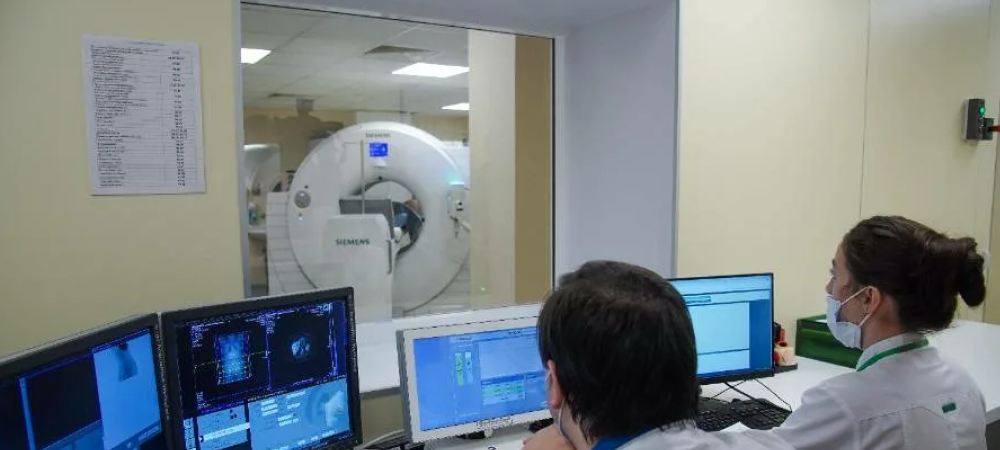
Surgical facility managers face mounting financial pressures every single year. Operating an independent surgical center requires balancing high overhead costs, expensive medical equipment, and complex insurance rules. A single missed implant charge or an incorrectly applied modifier can wipe out the profit margin of an entire surgical case. Managing these intricate financial workflows in-house often strains administrative staff beyond their limits.
Partnering with specialized ambulatory surgery center billing companies provides a direct path to financial stability. However, not all medical billing vendors understand the distinct mechanics of outpatient facility reimbursement. Choosing the wrong partner leads to persistent claim denials, delayed collections, and uncollected facility fees. This selection guide outlines the critical capabilities, technology standards, and compliance benchmarks you must evaluate before signing a billing partnership.
Evaluating Deep ASC Facility Expertise and Surgical Coding Mastery
General physician billing methods fail completely when applied to surgical facilities. Outpatient centers operate under unique payment structures that combine facility fees, bundled supply allowances, and strict coverage lists. Your prospective billing vendor must demonstrate proven mastery over these specific facility mechanics.
Mastering Complex Facility Rules and NCCI Packaging Edits
Facility coders must manage National Correct Coding Initiative (NCCI) edits designed specifically for outpatient centers. These rules dictate which surgical supplies, anesthesia services, and secondary procedures are packaged directly into the primary facility payment. An inexperienced biller might unbundle services improperly, triggering fraud audits, or fail to bill allowed separate items, leaving legitimate revenue uncollected.
Info: Always ask potential billing partners about their internal coding audit frequency. Top-tier vendors perform monthly coding checks to ensure full compliance with updated NCCI packaging edits.
Navigating Multiple-Procedure Discounting Rules
Performing multiple surgical procedures in a single operative session alters reimbursement logic drastically. Insurance payers reimburse the primary, highest-valued procedure at 100% of the contracted rate, while secondary and subsequent procedures drop to 50% or less. Experienced billing teams sequence CPT codes from highest to lowest financial value on every claim to maximize net collections.
Enforcing Precise Modifier Usage on Facility Claim Forms
Facility claims rely on specialized modifiers to communicate clinical context. Misapplying these codes leads to instant technical rejections.
- Modifier -SG: Designates a facility charge on commercial claim forms.
- Modifier -73: Reports a procedure canceled prior to anesthesia induction, securing partial facility payment.
- Modifier -74: Reports a procedure canceled after anesthesia induction, securing full facility reimbursement.
Capturing Every Dollar on High-Cost Implants and Pass-Through Devices
Surgical implants, synthetic meshes, and specialized orthopedic hardware represent massive upfront capital investments for your center. Failing to capture device charges accurately destroys facility profitability.
Preventing Revenue Leaks with OR Log-Based Device Tracking
A qualified ambulatory surgery center billing partner must maintain a precise tracking system tied directly to your operating room logs. Scanned barcode data and nursing implant logs must match billing entries perfectly.
The vendor must verify whether a device qualifies for separate pass-through payment under specific Medicare HCPCS C-codes or if commercial contracts require invoice attachments. Missing a single high-cost spinal implant charge can cost your facility thousands of dollars in unreimbursed expenses.
Use this table to evaluate how an expert partner manages device reimbursement versus an inexperienced billing vendor:
Device Reimbursement Feature | Inexperienced Billing Vendor | Specialized ASC Billing Partner |
OR Log Reconciliation | Relies on manual entry | Automated match between OR logs and billing |
Invoice Attachment Handling | Frequently missing, causing denials | Automatically attaches vendor invoices to claims |
Pass-Through Device Tracking | Misses specialized HCPCS C-codes | Accurately applies current C-codes for separate payment |
Contractual Fee Auditing | Accepts default payer bundles | Audits line-item payments against implant carve-outs |
Stopping Denials Before Surgery with Rigorous Pre-Authorization
Surgical claims face immediate denial if pre-service requirements fall through the cracks. Securing financial clearance before the patient enters the operating room protects both patient safety and facility cash flow.
Eliminating Same-Day Surgical Cancellations and Pre-Service Denials
Your billing partner must enforce a proactive financial clearance process at least five days prior to surgery. Front-office staff and billing teams must verify insurance eligibility, confirm active policy benefits, and secure precise authorization numbers matching planned surgical CPT codes.
Note: Authorization mismatches frequently occur when surgeons alter planned procedures mid-case. A strong partner contacts payers within 24 hours post-surgery to update authorization logs before filing final claims.
Recovering Lost Revenue Through Active Contractual Underpayment Audits
Insurance payers regularly process claims at incorrect rates due to system glitches or outdated fee schedules. Processing initial claims is only half the battle; recovering underpaid funds completes the revenue cycle.
Fighting Commercial and Medicare Underpayments Against Agreed Fee Schedules
Generic billing firms often write off unpaid balances as contractual adjustments without checking underlying contract terms. A dedicated ASC partner loads your specific commercial contracts and Medicare fee schedules into their software.
Every single remitted payment undergoes automated auditing against contracted rates. When a payer underpays an implant carve-out or misapplies a multiple-procedure discount, the partner initiates immediate appeals to recover every owed dollar.
Demanding High Technology Standards and Uncompromising Data Security
Modern surgical centers rely on advanced digital tools to manage clinical documentation and scheduling. Your billing partner’s software infrastructure must integrate smoothly with your existing technical stack.
Ensuring Seamless Clinical and EHR Software Integration
Manual data entry between clinical tools and billing platforms introduces constant human error. Your billing partner should offer native integration with leading ASC management platforms such as HST Pathways, Amkai, or Surgical Information Systems (SIS).
Bi-directional data sync ensures patient demographics, operating room logs, and clinical notes flow directly into the billing system. This seamless integration speeds up claim generation cycles and reduces unbilled case metrics drastically.
Verifying SOC 2 Type II Compliance and Strict HIPAA Protections
Outsourcing sensitive financial and patient health data requires strict security oversight. You must confirm that prospective ambulatory surgery center billing companies maintain robust cybersecurity standards.
Verify that the billing firm holds SOC 2 Type II compliance verification. This independent security auditing report proves the vendor maintains rigorous controls over data confidentiality, system availability, and privacy. The partner must also execute comprehensive Business Associate Agreements (BAAs) enforcing strict HIPAA compliance across all operational teams.
Demanding Transparent Real-Time Dashboards and Actionable Metrics
Never partner with a company that hides your financial data behind static monthly reports. You need continuous, real-time visibility into your facility’s financial health.
Demand custom executive dashboards that track key performance indicators around the clock. Your leadership team should monitor critical operational benchmarks effortlessly.
Focus on these core performance indicators when evaluating prospective partners:
- Clean Claim Rate: Target benchmark above 97% on initial submission.
- Days in Accounts Receivable (A/R): Target benchmark under 35 days.
- Initial Denial Rate: Target benchmark below 5% across all commercial and government payers.
- A/R Over 90 Days: Target benchmark under 10% of total outstanding receivables.
Final Thoughts
Selecting the right ambulatory surgery center billing partner shapes the financial future of your facility. Outpatient surgical centers operate under complex payment structures that demand specialized expertise in facility fee coding, NCCI packaging rules, and implant reimbursement. Partnering with a vendor that offers real-time dashboard visibility, seamless EHR integration, and strict SOC 2 Type II data security protects your facility from revenue leaks. A dedicated partner audits underpayments aggressively, ensuring commercial payers reimburse every dollar owed according to your contracts.
Eliminating administrative bottlenecks allows your surgical team to focus completely on delivering exceptional patient care. Flawless pre-authorization workflows stop costly day-of cancellations and prevent sudden claim rejections. Clean claims accelerate monthly cash flow, providing the working capital needed to expand your surgical services. Secure your facility revenue and protect your bottom line today. Contact YTC Healthcare right now to optimize your surgery center billing operations.
Frequently Asked Questions
What should I look for when evaluating ambulatory surgery center billing companies?
Look for specialized facility coding expertise, proven implant tracking capabilities, proactive pre-authorization workflows, and active contractual underpayment recovery. Ensure the company integrates cleanly with software like HST Pathways and maintains SOC 2 Type II compliance.
How do billing partners track high-cost surgical implants?
Top billing partners reconcile operating room logs and barcode scans directly with billing records. They attach vendor invoices to claims and apply specific HCPCS Level II C-codes to capture allowed pass-through device reimbursements without absorbing unreimbursed costs.
Why is SOC 2 Type II compliance important for an ASC billing partner?
SOC 2 Type II compliance is an independent audit verification proving that the billing vendor maintains strict security controls over sensitive patient health data and financial records. It guarantees high-level cybersecurity and strict adherence to HIPAA privacy laws.
What is a good clean claim rate benchmark for an ASC billing service?
A top-tier ASC billing partner should achieve a clean claim rate of 97% or higher on initial submission. Maintaining this high benchmark minimizes administrative rework, prevents claim denials, and keeps accounts receivable days under 35 days.